Alright folks—this one’s been the question in my inbox lately:
“What does it actually mean when a model has 7 billion parameters? Or 70 billion? And why should I care?”
Let’s break it down in a way that works whether you write code for a living… or just want to sound knowledgeable amongst your friends.
What Do “Parameters” Mean in Large Language Models (LLMs)?
If you’ve heard people talk about modern AI, you’ve definitely heard phrases like:
-
“This is a 7B parameter model”
-
“That one is 175B parameters”
-
“More parameters = smarter AI”
Some of that is true. Some of it is marketing. And some of it is misunderstood—even by technical folks.
Let’s clear it up.
First: What Is a Parameter?
At its simplest, a parameter is a number the model learned during training.
That’s it.
More precisely:
-
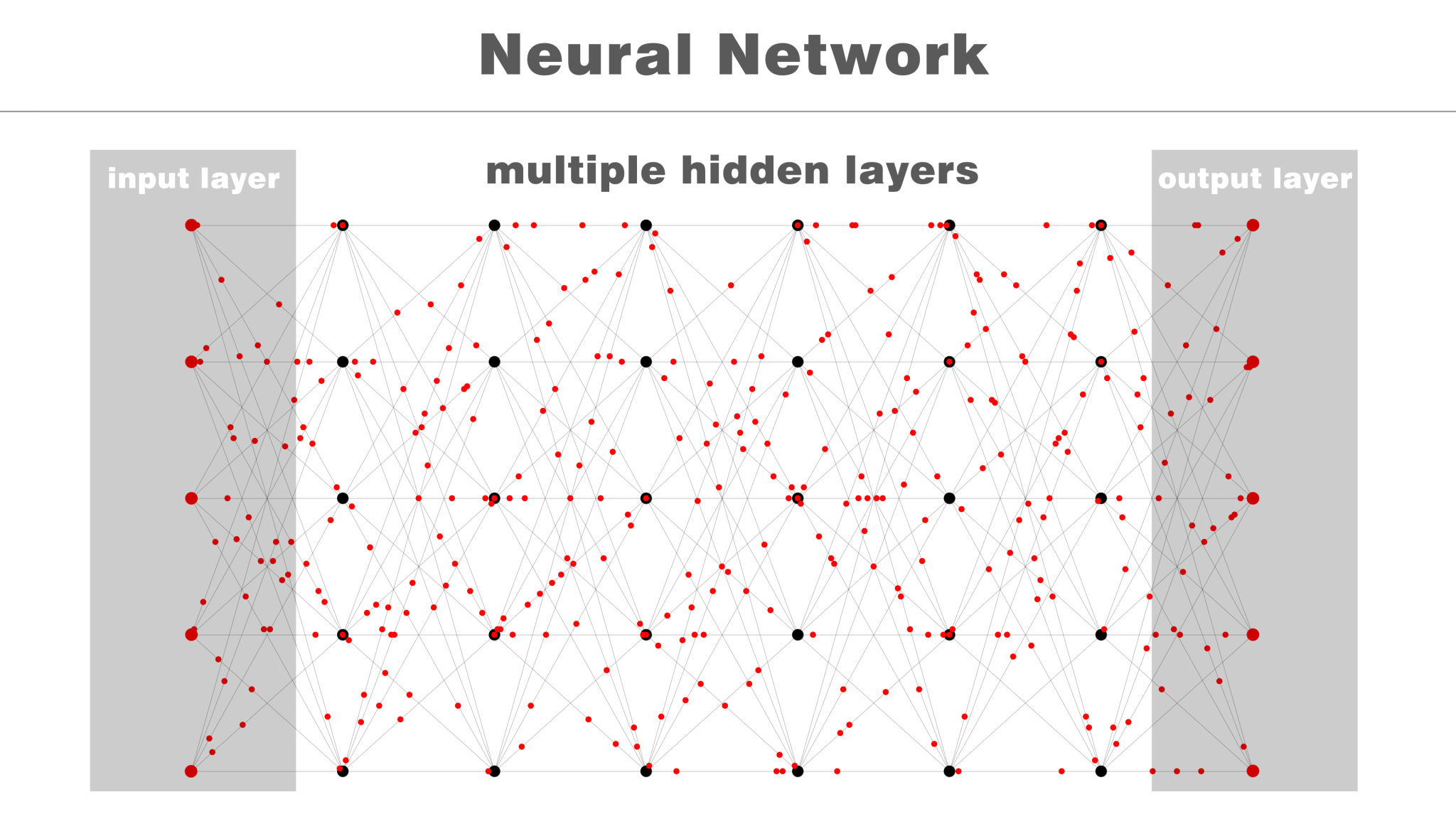
Parameters are weights inside a neural network
-
They determine how strongly one concept influences another
-
They’re adjusted during training so the model can predict the next word correctly
If that sounds abstract, here’s a better analogy 👇
Think of Parameters Like Experience
Imagine you’re learning a language.
Every time you read or hear something, your brain adjusts:
-
How likely is “peanut butter” to follow “jelly”?
-
Does “bank” usually mean money or a river?
-
When someone says “that’s sick”, are they impressed or concerned?
Those tiny mental adjustments are kind of like parameters.
Now scale that idea up… billions of times.
What Parameters Do Inside a Model
Inside an LLM:
-
Words are turned into numbers (embeddings)
-
Those numbers flow through layers of math
-
Parameters control how information flows and combines
-
The final output is a probability for the next word
So when you see a response that feels coherent, insightful, or creative—
that’s billions of parameters working together to shape that output.
Why Parameter Count Matters
1. Capacity to Learn Patterns
More parameters generally mean:
-
More nuance
-
Better abstraction
-
Stronger ability to represent complex relationships
A tiny model might learn:
“Paris → France”
A much larger model can learn:
“Paris in the context of history, culture, geopolitics, literature, sarcasm, and memes”
2. Emergent Abilities
This is where things get wild.
At certain sizes, models suddenly learn skills that weren’t explicitly trained:
-
Multi-step reasoning
-
Writing code
-
Translating languages they barely saw
-
Following instructions
These are called emergent behaviors, and they tend to appear as parameter counts grow.
But Bigger Is Not Always Better
Here’s the part that often gets lost in hype.
Parameters ≠ Intelligence (by themselves)
A model with more parameters can still be:
-
Poorly trained
-
Biased
-
Slow
-
Expensive to run
-
Worse at specific tasks than a smaller, specialized model
Think of it like this:
-
A massive library is useless if the books are disorganized
-
A smaller library with great indexing can be faster and more useful
Training Data Matters Just as Much
Two models can have the same number of parameters and behave very differently.
Why?
-
Data quality
-
Data diversity
-
Training objectives
-
Alignment and fine-tuning
Parameters are potential.
Training turns that potential into capability.
| Size | What It Feels Like |
|---|---|
| Millions | Basic pattern matching |
| 1–7B | Solid text, basic reasoning |
| 10–30B | Strong general assistant |
| 70B+ | Deep reasoning, nuance, creativity |
| 100B+ | Broad knowledge + emergent behaviors |
Note: the above isn’t always a hard rule, more of a mental model to think about the parameter size.
Why Smaller Models Are Making a Comeback
Interestingly, the industry is swinging back toward smaller models.
Why?
-
Faster inference
-
Cheaper to run
-
Easier to deploy privately
-
Fine-tuned models can outperform massive ones on narrow tasks
In practice, teams are asking:
“What’s the smallest model that does the job well?”
A Simple Mental Model to Keep
If you remember nothing else, remember this:
Parameters define how much a model can know.
Training defines what it does know.
Prompting defines how well it uses that knowledge.
All three matter.
Final Thought
When someone tells you:
“This model has X billion parameters”
What they’re really saying is:
“This is how much expressive power the model might have.”
The magic happens in how those parameters are trained, tuned, and used.